
Build your own arcade
What Kind of Wood Is Used for an Arcade Cabinet?
On this page7
What kind of wood is used for an arcade cabinet? MDF and plywood are two useful starting choices for a home enclosure. MDF offers a smooth face for paint. Plywood has a layered construction and comes in many grades. Neither name by itself gives you a finished cabinet weight, strength rating or fastening plan.
Choose the material after reading the cabinet plan. Use the exact panel thickness and product grade, then check the joints and display mounting arrangement. Compare sheet data rather than assuming all plywood is light or all MDF behaves alike. Make an edge and finish sample. Control cutting dust at the source and keep electronics away from the work.
Compare the actual MDF and plywood sheets
The MDF source comes from the Composite Panel Association. It explains the fiber-based panel. APA explains plywood and its layers. These describe broad types of stock. Read the data for the exact sheet you plan to buy as well.
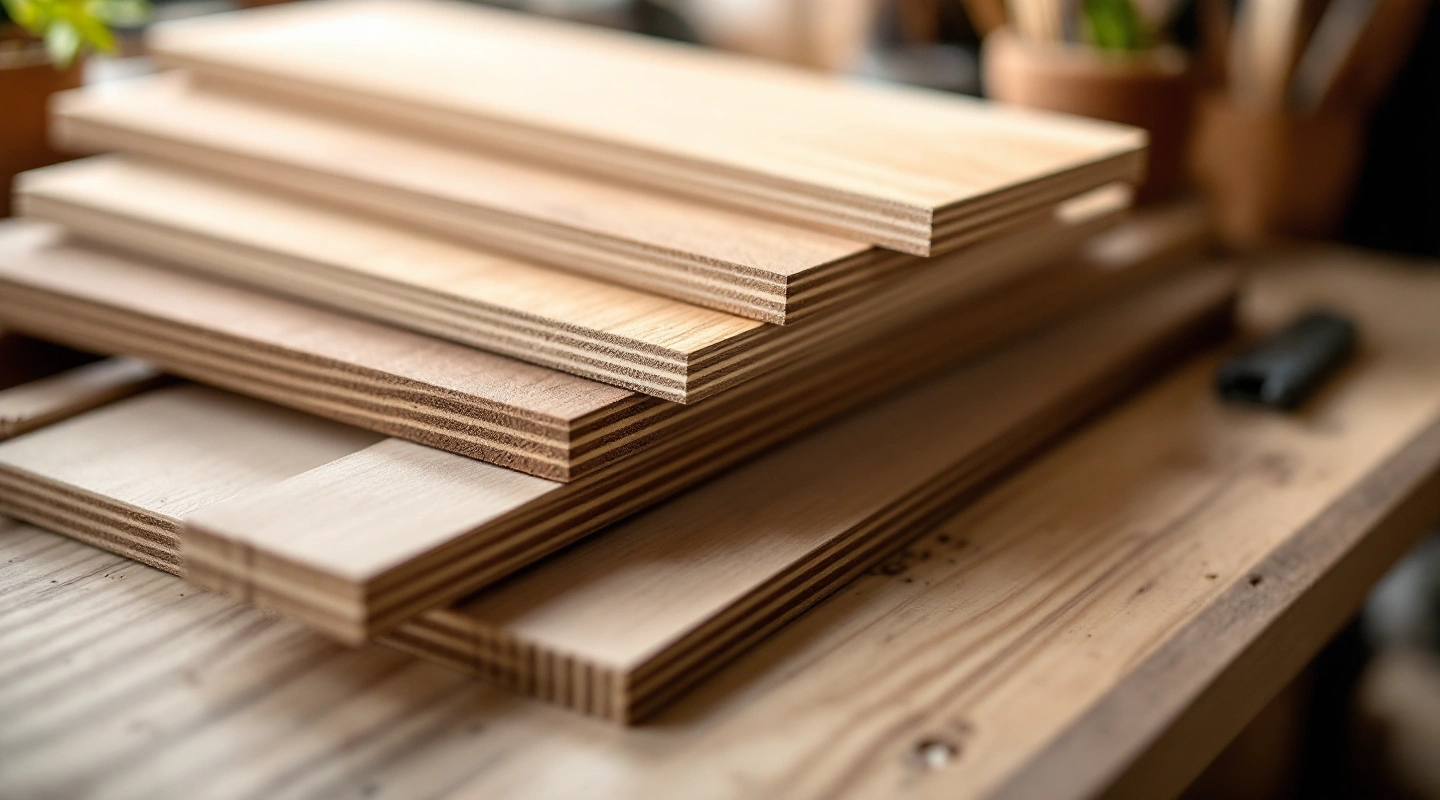
MDF can be useful where a flat painted surface matters. Its cut edges need their own finishing work. Plywood shows layers at the edge, which can be left visible or covered as part of the design. The face grade affects the amount of preparation needed for the finish you want.
Do not turn these broad differences into an unsupported rule that one is always stronger or lighter. Species, grade and thickness affect a plywood panel. Density and product specification affect MDF. Use the maker's data for the actual sheet when weight or loading is important.
| Compare | MDF check | Plywood check |
|---|---|---|
| Finished face | Check the surface and the chosen coating system | Check face grade and defects, plus the desired grain finish |
| Exposed edges | Trial the edge sealing and paint finish | Decide whether layers remain visible or need edging |
| Joints | Use fixing guidance for the actual fiberboard product | Check joint orientation and fixing guidance for the actual panel |
| Weight | Use sourced sheet mass or a real measured sample | Use sourced sheet mass; species and grade matter |
| Thickness | Measure before sizing between-side panels | Measure before sizing between-side panels |
Scroll for more →
MDF check
- Finished face
- Check the surface and the chosen coating system
- Exposed edges
- Trial the edge sealing and paint finish
- Joints
- Use fixing guidance for the actual fiberboard product
- Weight
- Use sourced sheet mass or a real measured sample
- Thickness
- Measure before sizing between-side panels
Plywood check
- Finished face
- Check face grade and defects, plus the desired grain finish
- Exposed edges
- Decide whether layers remain visible or need edging
- Joints
- Check joint orientation and fixing guidance for the actual panel
- Weight
- Use sourced sheet mass; species and grade matter
- Thickness
- Measure before sizing between-side panels
Match wood thickness to the arcade cabinet plan
For the enclosure shown in our blueprint worksheet, start with 18 mm sides and keep that thickness through the cut list. It is a useful starting choice for that plan, not a universal cabinet specification. Measure the actual sheet before cutting the between-side parts; nominal 3/4-inch stock is not exactly 18 mm. For a different kit or plan, use its specified thickness, joints and bracing instead.
For example, a 600 mm-wide enclosure with two 18 mm sides has a 564 mm space between them. A nominal replacement sheet that is thinner changes that opening. Keep the actual measurement in the cut list so shelves and rear panels do not end up loose or too wide.
Also check the control panel stack. Paint, artwork and a clear cover add thickness above the wood. Adafruit's product 3488 gives an approximate mounting thickness for that specific button family. A button that fits bare stock may not fit the finished stack. A lever can have different limits again.
Work out wood weight for an arcade cabinet
Get the sheet's stated mass from its maker or supplier. Keep the sheet dimensions with that mass. A weight quoted for a different thickness or sheet area cannot be used unchanged. If no reliable record is available, mark sheet mass unknown rather than adopting a generic internet figure.
For a rough sheet estimate, divide the used panel area by the full sheet area and multiply by the sheet mass. Label the result as an estimate. It leaves out fasteners and hardware. It also leaves out the display and computer, plus any internal framing, which must be added separately.
The finished cabinet can be awkward even if the sheet estimate looks modest. Its height and grip points matter during handling. A sheet estimate is not a lifting instruction or floor-load approval. Use the room and doorway checker to keep size separate from those questions.
Plan edges and joints before assembly
Choose how an exposed edge will look before cutting. A plywood side with visible layers needs a different finish plan from a painted smooth panel. Test the chosen edge treatment on an offcut. A small sample is cheaper to revise than a completed cabinet side.
Read the fixing maker's instructions for the stock and joint. Hole size, edge distance and screw engagement are not universal. Avoid a fixing that nearly reaches an exposed face. Keep removable service panels in mind so ordinary access does not require repeated damage to the same hole.
The display bracket needs a resolved attachment to the structure. Decorative trim is not a substitute for that attachment. Likewise, adding a rear panel does not automatically settle the whole cabinet's stability. Check the actual base and bracing, then the load path in the build plan.
Control cutting dust and finish fumes
OSHA's wood-dust guidance identifies dust hazards and describes local exhaust near the cutting source. Follow the cutting tool's dust and guarding instructions. Do not treat a domestic room fan as proof that dust exposure is controlled.
The EPA wood-panel page explains US rules for formaldehyde emissions. Check the label on covered panels when you buy them. That label does not make cutting dust safe. It does not tell you which finish to use indoors either. Read both sets of product instructions.
Keep displays and electronics out of the cutting and sanding area. Follow the coating maker's drying and ventilation directions before refitting them. A surface that feels dry may still be inside the maker's cure period. Let the product instructions govern that step.
Frequently asked questions
Is MDF always heavier than plywood?
Do not assume a universal ranking from the family name. Compare equal areas and actual thicknesses using the chosen products' sourced mass. Plywood varies by species and construction. MDF also comes in different specifications. Keep the sheet data with the estimate and add all hardware for a finished-weight estimate.
Can I use thinner wood to make a cabinet lighter?
Changing thickness changes the internal dimensions and the joint design. It may also affect the display mount and bracing. Rework those details rather than copying the old cut list. A lighter sheet alone is not proof that the new enclosure remains suitable for its equipment or normal use.
Do the button holes depend on the wood?
The required hole comes from the exact button, while the allowed panel thickness depends on its mounting design. Include any cover or artwork in that thickness. Use the button worksheet to plan centers, then trial the real part in scrap made from the finished panel material.
Should I paint before assembling the cabinet?
That depends on the finish and joint arrangement. Plan access to edges and faces before assembly, and keep bonding surfaces suitable for the chosen adhesive or fixing. Remove electronics for dusty work. Use a sample and the coating instructions to decide the order, drying time and cure period.
Verdict
The answer to what kind of wood is used for an arcade cabinet is a material specification, not one magic sheet. Match actual stock to the plan and hardware. Continue with the complete build sequence once the cut list and fixing details use those checked measurements.